Loading

5 minute read
Why Daily Coral Feeding is Essential in Artificial Reef Aquariums
The Short Version
Corals rely on photosynthetic Zooxanthellae algae embedded in their tissue for up to 85% of their energy requirements, but the remaining 15%, obtained through heterotrophic feeding on essential nutrients, is crucial for tissue formation, calcification, and ongoing metabolic processes.
Heterotrophic feeding is the consumption of organic matter, and in reef aquariums, corals lose the benefit of the continuous pulses of dissolved organics found on natural reefs, which can result in stunted growth, faded coloration, and reduced resilience to stress.
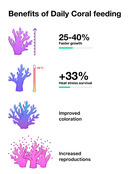
Daily coral feeding is therefore essential to replicate these missing nutrient inputs. In fact, even dividing the weekly dosage into seven daily increments is preferable to dosing two to three times per week, which can create feast-and-famine cycles. Daily dosing does not increase the risk of algal blooms; instead, it promotes a steady metabolic state, enhancing calcification rates by up to 40%, increasing linear growth by 25–40%, improving survival under stress, and supporting better pigmentation and reproduction.

Best practise – Daily feeding!
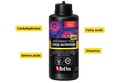
Daily feeding works best with designated coral food, such as Red Sea’s Reef Energy Plus coral, which is designed for maximum efficiency with daily dosing, combining carbohydrates, amino acids, fatty acids, and vitamins in a single all-in-one formula. It provides a practical, fully absorbed daily nutrition solution suitable for SPS, LPS, soft, and non-photosynthetic corals, while minimizing risks to water quality.
So let’s take a closer look
In the world of artificial reef aquariums, vibrant corals form the backbone of a thriving ecosystem, mimicking the biodiverse underwater landscapes of the ocean. However, maintaining these delicate organisms in captivity presents unique challenges.
Unlike corals in nature, which benefit from constant nutrient fluxes from currents, plankton blooms, and microbial interactions, aquarium corals often face nutritional deficits that can stunt growth, dull colors, and reduce resilience to stressors like temperature fluctuations or poor water quality.
Daily coral feeding is a simple yet critical practice that bridges this gap, ensuring corals not only survive but flourish.
The Dual Nutrition Strategy of Corals:
Beyond Photosynthesis Alone
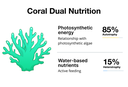
Corals are masters of metabolic efficiency, relying on a symbiotic relationship with photosynthetic algae (zooxanthellae) for up to ~85% of their energy needs through autotrophy – the process of converting light into chemical energy. This internal “solar-powered” system powers daily respiration, growth, and calcification, the process that builds their calcium carbonate skeletons.
However, the remaining 15% of nutrition comes from heterotrophy: the active capture and digestion of organic particles like plankton, bacteria, and dissolved compounds from the surrounding water. In natural reefs, heterotrophic inputs are pulsed and abundant, delivered via tidal flows and upwelling events.

But in the controlled environment of an aquarium, these inputs are sporadic at best – often limited to fish waste, uneaten food, or infrequent water changes.
Without supplementation, corals can enter a state of chronic undernourishment, leading to slowed metabolism and vulnerability. Research underscores this: a study on scleractinian corals found that heterotrophic feeding enhances calcification rates by up to 40%, directly boosting skeletal growth and overall tank aesthetics. Another investigation revealed that fed corals incorporated up to two-thirds of their carbon budget from external sources, far exceeding autotrophy alone in nutrient-limited setups.
For captive corals, heterotrophy isn’t optional – it’s a lifeline. In aquacultured settings, where light and flow are optimized, but food is scarce, daily feeding mimics these natural pulses, preventing energy deficits that manifest as retracted polyps, tissue recession, or bleaching.
The Science of Daily Feeding:
Growth, Resilience, and Reproduction
Why daily? The answer lies in coral physiology and aquarium dynamics. Corals don’t store excess energy like some fish; their metabolic demands fluctuate with light cycles, requiring steady nutrient replenishment to fuel nighttime respiration and repair. Infrequent feeding (e.g., weekly broadcasts) leads to boom-and-bust cycles, where corals gorge then starve, stressing their systems.
Daily doses, however, promote steady-state nutrition, optimizing uptake without overwhelming filtration systems.
Scientific studies paint a compelling picture; In a controlled experiment on Acropora and Pocillopora corals, daily heterotrophic inputs increased growth rates by 25-40% compared to partial (twice a week) or unfed controls, with benefits compounding over months.
For heat-stressed corals, feeding regimes improved survival by 33%, as nutrients bolstered energy reserves for repair and symbiont retention. Even in low-light aquariums, where autotrophy wanes, daily plankton supplementation enhanced tissue expansion and pigmentation, countering the “washed-out” look common in hobbyist tanks.
Daily feeding also has reproduction benefits. Fed corals exhibit higher budding rates and spawning success, with one study noting a 20% uptick in alkalinity demand – a proxy for reproductive energy allocation – after consistent feeding.
Invertebrates like anemones and feather duster worms, often cohabitants in reef tanks, also thrive, splitting more frequently and extending feeding structures.

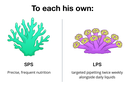
Critically, daily feeding targets specific coral types: small-polyp stony (SPS) corals, which demand precise, frequent nutrition for rapid calcification, benefit from nightly broadcasts lasting 2-6 hours. Large-polyp stony (LPS) varieties, with their tentacle-trapping prowess, respond to targeted pipetting twice weekly alongside daily liquids.

Red Sea Reef Energy Plus: A Data-Driven Solution for Daily Nutrition
Red Sea Reef Energy Plus is an all-in-one coral superfood formulated to address these exact needs.
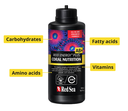
This organic complex blends dissolved and suspended carbohydrates, amino acids, fatty acids, and vitamins – mimicking the full spectrum of reef-derived organics.
A key advantage of Red Sea Reef Energy Plus is its formulation of dissolved and suspended simple building blocks (carbohydrates, amino acids, fatty acids, and vitamins) that are directly and rapidly absorbed by corals. Every component is fully consumed and utilized by the corals for metabolic processes such as protein production and soft tissue regeneration within minutes, leaving no unnecessary residual organic material in the aquarium.
As a result, it does not increase nitrate or phosphate levels in ways that induce nuisance algae outbreaks or bacterial blooms, while also minimizing overload on protein skimmers – making it safe and effective for daily use in nutrient-controlled systems.
Best Practice Feeding
If you’re feeding Reef Energy Plus manually, consider switching to a smart doser like ReefDose. it makes it easier by automatically dividing your weekly dosage into seven daily portions, pausing the protein skimmer during dosing, and helping maintain a consistent routine even when you’re busy.
For daily integration, dose 4-8 ml per 100 litres (25 gallons) nightly, adjusting upward under LED lights if growth lags. This consistency aligns with research on optimized feeding rates, where small, frequent additions (e.g., 0.5-2% body weight daily) yield superior results over sporadic blasts.
Reef Energy Plus’s stability – unrefrigerated for up to a week – makes it ideal for hobbyists, while its broad applicability suits soft, LPS, SPS, and even non-photosynthetic corals.
5 minute read
Why Daily Coral Feeding is Essential in Artificial Reef Aquariums
The Short Version
Corals rely on photosynthetic Zooxanthellae algae embedded in their tissue for up to 85% of their energy requirements, but the remaining 15%, obtained through heterotrophic feeding on essential nutrients, is crucial for tissue formation, calcification, and ongoing metabolic processes.
Heterotrophic feeding is the consumption of organic matter, and in reef aquariums, corals lose the benefit of the continuous pulses of dissolved organics found on natural reefs, which can result in stunted growth, faded coloration, and reduced resilience to stress.
Daily coral feeding is therefore essential to replicate these missing nutrient inputs. In fact, even dividing the weekly dosage into seven daily increments is preferable to dosing two to three times per week, which can create feast-and-famine cycles. Daily dosing does not increase the risk of algal blooms; instead, it promotes a steady metabolic state, enhancing calcification rates by up to 40%, increasing linear growth by 25–40%, improving survival under stress, and supporting better pigmentation and reproduction.
Best practise – Daily feeding!
Daily feeding works best with designated coral food, such as Red Sea’s Reef Energy Plus coral, which is designed for maximum efficiency with daily dosing, combining carbohydrates, amino acids, fatty acids, and vitamins in a single all-in-one formula. It provides a practical, fully absorbed daily nutrition solution suitable for SPS, LPS, soft, and non-photosynthetic corals, while minimizing risks to water quality.
So let’s take a closer look
In the world of artificial reef aquariums, vibrant corals form the backbone of a thriving ecosystem, mimicking the biodiverse underwater landscapes of the ocean. However, maintaining these delicate organisms in captivity presents unique challenges.
Unlike corals in nature, which benefit from constant nutrient fluxes from currents, plankton blooms, and microbial interactions, aquarium corals often face nutritional deficits that can stunt growth, dull colors, and reduce resilience to stressors like temperature fluctuations or poor water quality.
Daily coral feeding is a simple yet critical practice that bridges this gap, ensuring corals not only survive but flourish.
The Dual Nutrition Strategy of Corals:
Beyond Photosynthesis Alone
Corals are masters of metabolic efficiency, relying on a symbiotic relationship with photosynthetic algae (zooxanthellae) for up to ~85% of their energy needs through autotrophy – the process of converting light into chemical energy. This internal “solar-powered” system powers daily respiration, growth, and calcification, the process that builds their calcium carbonate skeletons.
However, the remaining 15% of nutrition comes from heterotrophy: the active capture and digestion of organic particles like plankton, bacteria, and dissolved compounds from the surrounding water. In natural reefs, heterotrophic inputs are pulsed and abundant, delivered via tidal flows and upwelling events.
But in the controlled environment of an aquarium, these inputs are sporadic at best – often limited to fish waste, uneaten food, or infrequent water changes.
Without supplementation, corals can enter a state of chronic undernourishment, leading to slowed metabolism and vulnerability. Research underscores this: a study on scleractinian corals found that heterotrophic feeding enhances calcification rates by up to 40%, directly boosting skeletal growth and overall tank aesthetics. Another investigation revealed that fed corals incorporated up to two-thirds of their carbon budget from external sources, far exceeding autotrophy alone in nutrient-limited setups.
For captive corals, heterotrophy isn’t optional – it’s a lifeline. In aquacultured settings, where light and flow are optimized, but food is scarce, daily feeding mimics these natural pulses, preventing energy deficits that manifest as retracted polyps, tissue recession, or bleaching.
The Science of Daily Feeding:
Growth, Resilience, and Reproduction
Why daily? The answer lies in coral physiology and aquarium dynamics. Corals don’t store excess energy like some fish; their metabolic demands fluctuate with light cycles, requiring steady nutrient replenishment to fuel nighttime respiration and repair. Infrequent feeding (e.g., weekly broadcasts) leads to boom-and-bust cycles, where corals gorge then starve, stressing their systems.
Daily doses, however, promote steady-state nutrition, optimizing uptake without overwhelming filtration systems.
Scientific studies paint a compelling picture; In a controlled experiment on Acropora and Pocillopora corals, daily heterotrophic inputs increased growth rates by 25-40% compared to partial (twice a week) or unfed controls, with benefits compounding over months.
For heat-stressed corals, feeding regimes improved survival by 33%, as nutrients bolstered energy reserves for repair and symbiont retention. Even in low-light aquariums, where autotrophy wanes, daily plankton supplementation enhanced tissue expansion and pigmentation, countering the “washed-out” look common in hobbyist tanks.
Daily feeding also has reproduction benefits. Fed corals exhibit higher budding rates and spawning success, with one study noting a 20% uptick in alkalinity demand – a proxy for reproductive energy allocation – after consistent feeding.
Invertebrates like anemones and feather duster worms, often cohabitants in reef tanks, also thrive, splitting more frequently and extending feeding structures.
Critically, daily feeding targets specific coral types: small-polyp stony (SPS) corals, which demand precise, frequent nutrition for rapid calcification, benefit from nightly broadcasts lasting 2-6 hours. Large-polyp stony (LPS) varieties, with their tentacle-trapping prowess, respond to targeted pipetting twice weekly alongside daily liquids.
Red Sea Reef Energy Plus: A Data-Driven Solution for Daily Nutrition
Red Sea Reef Energy Plus is an all-in-one coral superfood formulated to address these exact needs.
This organic complex blends dissolved and suspended carbohydrates, amino acids, fatty acids, and vitamins – mimicking the full spectrum of reef-derived organics.
A key advantage of Red Sea Reef Energy Plus is its formulation of dissolved and suspended simple building blocks (carbohydrates, amino acids, fatty acids, and vitamins) that are directly and rapidly absorbed by corals. Every component is fully consumed and utilized by the corals for metabolic processes such as protein production and soft tissue regeneration within minutes, leaving no unnecessary residual organic material in the aquarium.
As a result, it does not increase nitrate or phosphate levels in ways that induce nuisance algae outbreaks or bacterial blooms, while also minimizing overload on protein skimmers – making it safe and effective for daily use in nutrient-controlled systems.
Best Practice Feeding
If you’re feeding Reef Energy Plus manually, consider switching to a smart doser like ReefDose. it makes it easier by automatically dividing your weekly dosage into seven daily portions, pausing the protein skimmer during dosing, and helping maintain a consistent routine even when you’re busy.
For daily integration, dose 4-8 ml per 100 litres (25 gallons) nightly, adjusting upward under LED lights if growth lags. This consistency aligns with research on optimized feeding rates, where small, frequent additions (e.g., 0.5-2% body weight daily) yield superior results over sporadic blasts.
Reef Energy Plus’s stability – unrefrigerated for up to a week – makes it ideal for hobbyists, while its broad applicability suits soft, LPS, SPS, and even non-photosynthetic corals.

Dr. Sharon Ram
Red Sea’s Chief scientist
Dr. Sharon Ram
Red Sea’s Chief scientist